If you’ve spent money on a skin, card or other digital item in a game, you already understand the basic idea behind blockchain gaming.
The difference is that blockchain technology can record certain game assets and transactions outside the developer’s normal database. For UK gamers, that can mean new ways to own, transfer or trade digital items, but it also introduces wallets, tokens and financial risks that traditional games don’t require.
This guide explains what blockchain gaming actually is, how NFTs and crypto fit into it, what players can own and what to check before spending money.
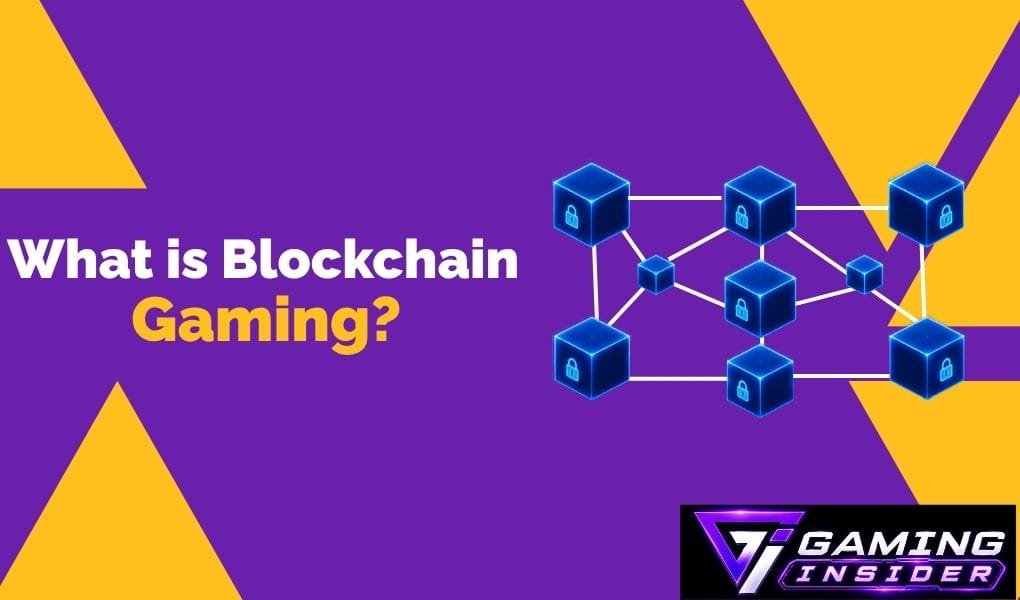
What Is Blockchain Gaming?
Blockchain gaming is video gaming that uses blockchain technology for elements such as digital ownership, transactions, rewards or game economies. Instead of keeping every asset entirely inside a developer-controlled database, a game can represent selected items or currencies as blockchain-based tokens.
The technology does not necessarily run the whole game. A blockchain game can still use conventional servers for gameplay, matchmaking, graphics and other functions while using a blockchain for specific ownership or transaction records.
That distinction matters because blockchain gaming is sometimes presented as if the entire game exists on a blockchain. In reality, the blockchain is usually one component of a larger gaming system.
How Does Blockchain Gaming Work?
The easiest way to understand it is to separate gameplay from ownership and transactions.
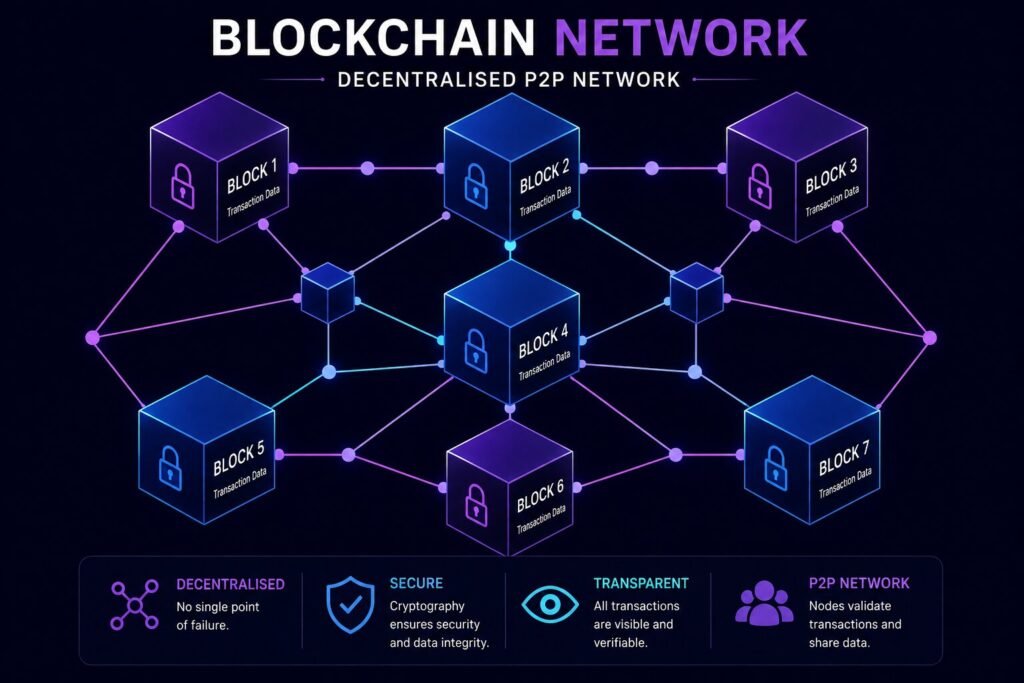
In a traditional game, your character, inventory and virtual currency are generally tied to an account controlled by the publisher. Blockchain gaming can move selected assets onto a blockchain, where ownership and transfers can be recorded independently of the game’s normal database.
A player may therefore use a wallet to hold a token representing an in-game item. The game then checks that wallet or blockchain record when determining whether the player owns the relevant asset.
Where do NFTs fit in?
NFTs, or non-fungible tokens, are commonly used to represent unique digital assets. A game might use an NFT for a character, collectible, card, piece of virtual land or another item.
The important point is that an NFT is the blockchain representation of an asset. It is not automatically the same thing as owning the game’s underlying software, artwork or intellectual property.
For a deeper explanation, see our guide to what are NFTs in crypto gaming.
What role do crypto tokens play?
Fungible crypto tokens can act as currencies or rewards within a blockchain game’s economy. Depending on the project, players might use them to purchase items, participate in certain systems or receive rewards.
Their market value can change, however. A token being used inside a game does not mean it has a stable value outside it.
What are smart contracts used for?
Smart contracts are programmes deployed on a blockchain that execute predefined rules. In gaming, they can support transactions, asset transfers and other blockchain-based functions.
This can reduce the need for a conventional intermediary for certain activities, although the game developer still controls many parts of the overall experience.
What Can You Actually Own?
The biggest difference between blockchain gaming and traditional gaming is often described as digital ownership. However, players need to understand exactly what that ownership covers.
A blockchain can prove that a particular wallet controls a particular token. It cannot automatically guarantee that the token will remain useful inside a game.
Depending on the game, players may own:
- NFT-based characters
- Digital cards
- Collectibles
- Virtual land
- Equipment or other game items
- Blockchain-based currencies or tokens
This creates an important distinction between owning an asset and owning its utility.
For example, imagine a game gives you an NFT representing a sword. You may control the NFT through your wallet, but the developer still determines whether the game recognises that sword and what it does.
If the game’s mechanics change, support for the item is removed, or the game closes, the blockchain record may still exist while the item’s usefulness disappears.
That is one of the most important things to understand before buying a blockchain game asset.
Is Blockchain Gaming the Same as Play-to-Earn?
No. Play-to-earn is a model within blockchain gaming, not a definition of blockchain gaming itself. A blockchain game can use NFTs or tokenised assets without paying players cryptocurrency for their gameplay.
Play-to-earn games are designed around rewards that players can potentially earn through gameplay. Those rewards may include tokens or digital assets that can be transferred or traded.
The distinction is useful because not every blockchain game is built around earning money. Some use blockchain primarily for ownership, collecting, trading or community features.
We’ve covered the model separately in our guide to what is play-to-earn gaming.
Benefits and Risks of Blockchain Gaming
Blockchain gaming can give players capabilities that are more limited in conventional game ecosystems.
| Feature | Potential benefit |
|---|---|
| Verifiable ownership | Ownership of supported tokens can be checked on-chain |
| Asset transfers | Some assets can be moved between compatible wallets |
| Trading | Certain items can be traded through supported marketplaces |
| Transparent records | Blockchain transactions can be publicly verifiable |
| Digital scarcity | NFTs can represent unique or limited assets |
However, these features are only useful when they improve the actual gaming experience.
A blockchain game does not become better simply because it has NFTs. If an asset adds unnecessary complexity without giving players a meaningful benefit, the technology can become more of a distraction than an advantage.
What Are the Risks?
Blockchain gaming introduces several risks that are less common in traditional gaming.
The first is financial risk. Crypto tokens and NFTs can fluctuate significantly in value, and an item that costs money today may not retain the same market value later.
There is also wallet security. Players who control their own assets are responsible for protecting access to their wallets. Sending an asset to the wrong address or interacting with a malicious transaction can create problems that cannot simply be solved through a game’s customer-support system.
Other issues include:
- Transaction fees
- Complicated wallet setup
- Scams and fraudulent projects
- Unclear asset utility
- Dependence on continued developer support
- Limited compatibility between games
- Token price volatility
For that reason, blockchain gaming should be approached as gaming with additional technology and financial considerations, rather than as a guaranteed way to make money.
How to Invest in Blockchain Gaming
If you want to invest in blockchain gaming, start by researching the project rather than buying a token simply because its price is rising. Depending on the project, you may be able to buy its gaming token or NFTs through a supported crypto exchange or marketplace.
A simple approach is:
- Research the game — check the developer, gameplay and development activity.
- Understand the token or NFT — know what you are buying and what it is used for.
- Choose a reputable platform — use a suitable exchange or marketplace and check its UK status where relevant.
- Set a budget — only invest money you can afford to lose.
- Secure your assets — use a reputable wallet and protect your recovery credentials.
- Avoid hype — don’t invest based solely on social-media claims, price predictions or promises of guaranteed returns.
For UK investors, the FCA considers cryptoassets high-risk and warns that you could lose all the money you invest.
Ownership vs Utility: The Question Most Players Miss
One of the easiest mistakes is assuming that owning a blockchain asset means you can use it anywhere.
Blockchain ownership and game compatibility are two different things. A token can exist independently on a blockchain while still requiring a particular game’s software to recognise it.
This means an NFT does not automatically work in another game simply because both games use the same blockchain. Developers must deliberately build systems that recognise and support the asset.
Before buying anything, ask:
- What exactly am I receiving?
- Where is ownership recorded?
- What can the asset actually do in the game?
- Can it be transferred or sold?
- What happens if the developer stops supporting it?
These questions provide a much better way of evaluating blockchain games than simply looking at an NFT’s price or rarity.
How Is Blockchain Gaming Different From Traditional Gaming?
Traditional games generally keep your inventory, progression and virtual currency within systems controlled by the publisher.
Blockchain games can place selected assets or transactions on a public blockchain. This can give players more direct control over supported assets and potentially allow them to transfer or trade them outside the game’s normal interface.
However, blockchain does not eliminate the developer’s role. The studio can still control the game’s servers, rules, updates, matchmaking and gameplay systems.
So the real difference is not that blockchain removes the developer. It is that certain parts of the game’s economy can operate through infrastructure that players can independently verify and interact with.
For the wider category, read our guide to what is crypto gaming.
How Do You Start Playing a Blockchain Game?
The safest approach is to choose the game before buying any associated cryptocurrency or NFTs.
A practical starting process is:
- Research the game and make sure you actually want to play it.
- Check the blockchain it uses and which wallet is supported.
- Understand the game’s assets before purchasing anything.
- Check transaction fees and marketplace requirements.
- Find out whether you can play without spending money.
- Never risk money you cannot afford to lose.
You may need a crypto wallet to interact with blockchain assets, depending on the game. Some projects can simplify this process through conventional account systems, while others require players to manage their own wallet from the beginning.
If you’re still unclear about the underlying systems, our guide to how does crypto gaming work explains how wallets, blockchains, tokens and game economies connect.
People Also Ask About Blockchain Gaming
Not always. Requirements vary between games. Some allow players to start without purchasing cryptocurrency, while others require a wallet or blockchain assets for particular features.
Some are free to start, while others require purchases. Always check the game’s entry requirements, transaction fees and optional purchases before committing money.
Some blockchain-based assets can be transferred or sold through compatible marketplaces. Whether an item can be traded depends on the game’s design and the type of asset involved.
Only when another game or platform has been designed to recognise and support the asset. Being stored on the same blockchain does not automatically make two games compatible.
Not necessarily. NFT games are a type of blockchain game that uses non-fungible tokens. Blockchain gaming is the broader category and can include other blockchain-based systems.
Bottom Line: Is Blockchain Gaming Worth Understanding?
Blockchain gaming is best understood as an evolution of how certain parts of a game can handle ownership, transactions and digital assets. NFTs and crypto tokens can give players new options, but they also introduce wallets, market volatility and additional risks.
The most useful question is not “Can I make money from this game?” Instead, ask whether the blockchain feature gives you a genuine benefit and whether you understand what you are actually owning. If the gameplay is compelling without the financial incentives, the blockchain elements have a much stronger reason to be there.