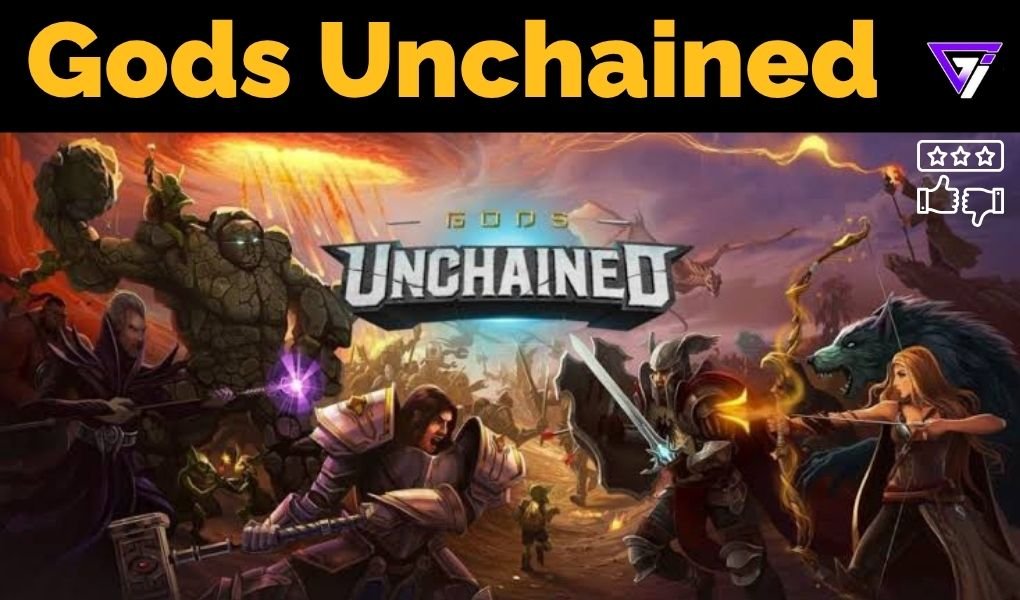
I’ve approached this Gods Unchained review from the question that matters most to a new player: is there a genuinely good card game underneath the blockchain features? The answer is yes, although the crypto side can make the game look more complicated than it really is.
Gods Unchained is a free-to-play strategic trading card game built around six gods, 30-card decks and collectible cards that can be traded as digital assets.
In this review, I’ll break down the gameplay, deck-building, rewards, $GODS economy and the biggest drawbacks so you can decide whether it deserves your time in 2026.
What Is Gods Unchained?
Gods Unchained is a free-to-play multiplayer strategy card game developed by Immutable. Its main selling point is that collectible cards can exist as digital assets rather than being permanently locked inside the game, giving players the ability to trade eligible assets.
The important point is that you do not need to treat Gods Unchained as a crypto investment to enjoy the card game. The blockchain layer sits alongside the core TCG rather than replacing it.
That distinction is important because a new player can easily become distracted by NFTs, wallets and $GODS before understanding whether the actual battles are enjoyable.
How Does Gods Unchained Gameplay Work?
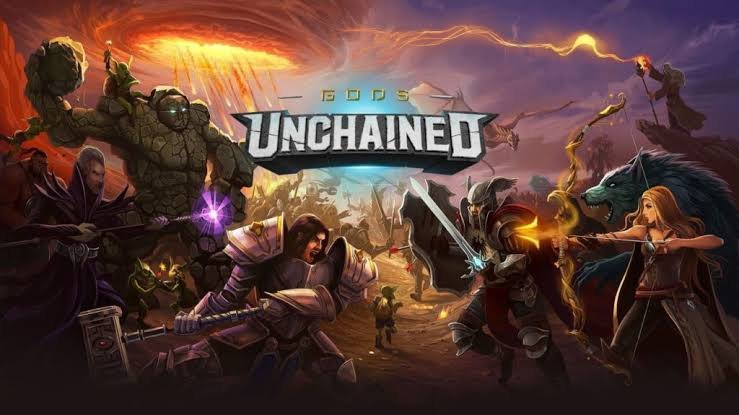
Gods Unchained plays like a traditional digital trading card game, but its combat system gives you plenty of decisions to make each turn. You choose a god, build a 30-card deck around its domain, manage mana and use creatures, spells and relics to reduce your opponent’s health to zero.
Is Gods Unchained easy to learn?
The basic objective is straightforward, but mastering the game takes considerably longer. The six domains — War, Light, Nature, Deception, Magic and Death — encourage different deck-building approaches, while neutral cards can be used across decks.
Best for:
- Players who already enjoy Hearthstone-style card games
- TCG fans who like experimenting with deck archetypes
- Players who want more strategic decisions than simply playing the highest-value card
Caveat:
- The terminology, card keywords and Web3 systems can make the first few hours feel more complicated than a conventional digital TCG.
What cards can you use?
There are three core card types: creatures, spells and relics. Creatures occupy board space and fight, spells provide immediate effects, while relics give your god additional abilities or attack options. You can have up to six creatures on the battlefield at once.
This is where I think Gods Unchained has more depth than its blockchain reputation suggests. The NFT system is not what makes the battles interesting; deck construction, mana management and card interactions are.
Is Gods Unchained Free to Play?
Yes. Gods Unchained is designed as a free-to-play game, and its official beginner guidance provides starter decks and rewards that help new players build their collections. Players can also receive card packs as they progress.
The free-to-play structure is one of the game’s strongest arguments because you can learn the fundamentals before spending money on cards or blockchain-related features.
What I like about the free-to-play model:
- Starter decks let newcomers learn without immediately buying cards
- Progression can provide additional card packs
- You can experiment before committing money to the ecosystem
Careful:
- Competitive deck-building becomes more complicated as you move beyond the starter collection.
- Collectible-card ownership introduces an additional marketplace layer that traditional TCG players may not need.
What Does the $GODS Token Do?
The $GODS token is the native ERC-20 token associated with the Gods Unchained ecosystem. Official documentation says it can be used for activities including crafting NFTs, purchasing packs and participating in governance-related functions.
I would treat $GODS as an optional part of the game’s economy rather than the reason to play the game. Its value can change independently of how much you enjoy the TCG, so buying the token purely because you like the game is a separate financial decision.
That distinction matters particularly for newcomers who may see “play-to-earn” language and assume the game guarantees income. It does not.
Does Gods Unchained Actually Have Good Rewards?
The reward structure gives players several reasons to keep playing beyond individual matches. The current Battle Pass system includes daily quests and $GODS rewards on its reward tracks, while the game’s progression systems can also provide card packs.
The result is a game where playing can contribute towards your collection rather than every useful card requiring an immediate purchase.
However, I wouldn’t approach Gods Unchained expecting it to function as a reliable money-making opportunity. Rewards, token values and the market for digital assets are separate from the quality of the underlying game.
What Makes Gods Unchained Different From Other TCGs?
The biggest difference is ownership. Gods Unchained was built around the idea that certain digital cards can become tradable assets rather than remaining completely confined to one account. Its official documentation describes cards and items as scarce digital assets that can be traded, with Immutable X used for the game’s blockchain infrastructure.
That gives the game an interesting proposition for collectors.
The trade-off is complexity. A conventional digital card game generally asks you to create an account and play. Gods Unchained can introduce wallets, blockchain transactions, token economics and NFT terminology into the experience.
For some players, that ownership model is the entire attraction. For others, it is unnecessary baggage.
Gods Unchained Pros and Cons
| Pros | Cons |
|---|---|
| Free-to-play entry point | Web3 systems can feel complicated |
| Deep deck-building | Blockchain features are not essential to enjoying the core game |
| Six distinct god domains | The learning curve can be significant |
| Tradable digital card ownership | Token values are financially volatile |
| Regular balance changes and new content | Competitive players need to keep up with the changing card pool |
| Mobile version is available | The experience is still closely tied to its Web3 ecosystem |
The game has also continued receiving balance changes in 2026. A July balance update adjusted multiple cards, showing that the developers are still actively tuning the meta rather than leaving the card pool untouched.
Is Gods Unchained Worth Playing in 2026?
For me, the answer depends on what you want from a card game. If your priority is strategic deck-building and competitive matches, Gods Unchained is worth trying because the core gameplay works without requiring you to become deeply involved with crypto.
If your main interest is making money from NFTs or $GODS, I would be much more cautious. The game’s financial elements should be treated separately from its entertainment value.
The strongest reason to try it is therefore simple: you like digital card games. The blockchain ownership system is an interesting bonus, not a substitute for good gameplay.
People Also Ask About Gods Unchained
Yes. Gods Unchained is still receiving new content, balance updates and seasonal systems in 2026. Its official site currently lists new expansions, a Battle Pass and recent gameplay updates.
Yes. You can begin with the game’s free-to-play systems and starter content without immediately buying cryptocurrency. A wallet becomes relevant if you want to use certain trading and blockchain features.
Yes. It is a digital trading card game built around deck construction, creatures, spells, relics, mana and strategic combat. Its Web3 features add ownership and trading mechanics around eligible digital assets.
Gods Unchained includes reward systems involving $GODS, including its current Battle Pass structure. However, rewards should not be interpreted as guaranteed income because token values and eligibility conditions can change.
It can be, particularly if you already understand digital TCGs. The official onboarding system includes tutorials, starter decks, AI matches and progression rewards, although the game’s wider card and Web3 systems take longer to understand.
Sources
| Source | What I used it for |
|---|---|
| Gods Unchained official site | Current game features, content and 2026 updates |
| Immutable Play – Gods Unchained | Current game availability and 2026 content |
| Games.gg | Gameplay structure and independent review context |
| PC Gamer | Historical context around Gods Unchained’s blockchain implementation |
Final Verdict
Gods Unchained is more interesting as a card game than as a crypto project, and that is ultimately a compliment.
The six god domains, deck-building and tactical combat give it a real gameplay foundation, while digital ownership adds something different for players who enjoy collecting and trading. I would recommend trying it free before spending anything.
If the battles keep you interested, explore the ownership features afterwards. If you’re only interested because of the possibility of earning money, I wouldn’t use that as a reason to start.