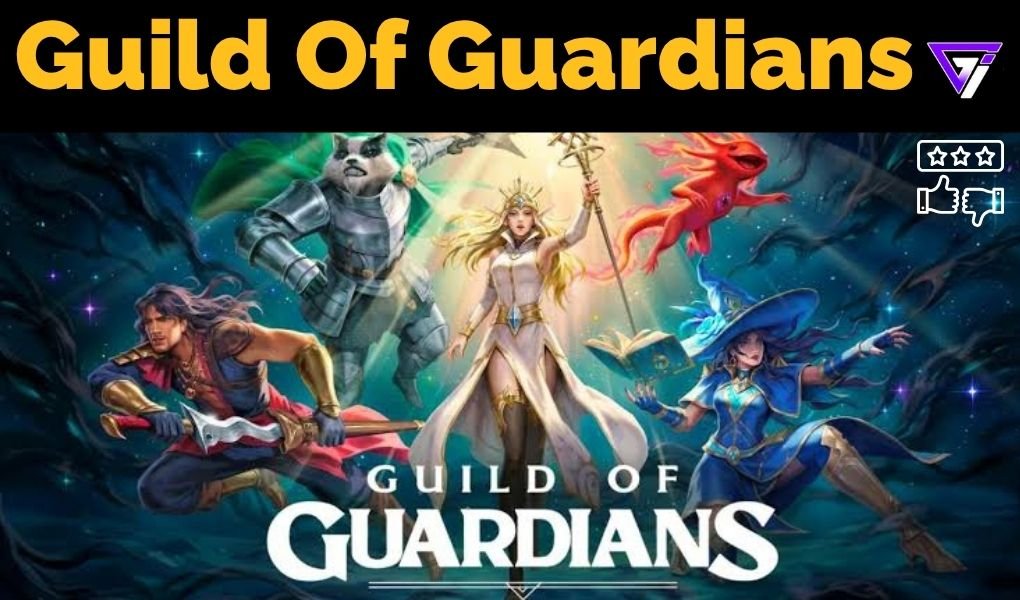
Guild of Guardians is one of the more interesting attempts to make blockchain gaming feel like an actual game rather than a crypto project with a game attached. What caught my attention is how much the experience has evolved beyond its original play-to-earn pitch.
The current version combines squad-building, dungeon progression, seasonal content, guild competition and increasingly hands-on combat with its Web3 economy.
In this Guild of Guardians review, I’ll break down how the game works, where its crypto elements actually matter, what has changed in 2026, and which type of player I think will get the most from it.
What Is Guild of Guardians?
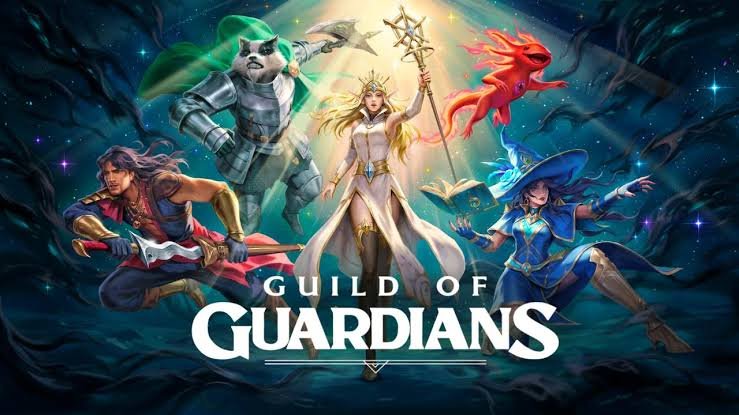
Guild of Guardians is a mobile RPG set in Elderym, where players collect and upgrade Guardians, build squads and progress through combat-focused content. The game mixes traditional hero-collection mechanics with blockchain ownership and an optional crypto economy built around $GOG and other digital assets.
What matters to me is that you don’t need to treat it purely as a crypto investment to understand the core game. The current version has considerably more going on than the early GameFi concept described in older reviews.
How does Guild of Guardians work?
Guild of Guardians revolves around building a roster of Guardians, improving their abilities and using suitable team compositions to progress through PvE and competitive content. Different Guardians fulfil different combat roles, while seasonal systems add additional progression and challenges.
The main gameplay loop includes:
- Collecting and upgrading Guardians
- Building squads around different roles
- Progressing through PvE content
- Participating in guild activities
- Competing through seasonal events and leaderboards
- Managing resources and equipment
- Taking part in newer competitive modes
The Google Play listing describes it as an idle RPG, while the developers have increasingly added mechanics that require more active decision-making. That distinction is important because the game is no longer best understood as simply an automated dungeon crawler.
Guild of Guardians Gameplay
The gameplay is built around roster management and progression rather than the sort of direct movement and exploration you would expect from a traditional action RPG. That makes team composition particularly important.
I think this is one of the game’s biggest strengths for players who enjoy collection-based RPGs. You are not simply trying to win individual battles; you are building a roster that needs to work across different challenges, seasons and modes.
Is Guild of Guardians an idle RPG?
Yes. Guild of Guardians combines idle progression with squad-based RPG combat. However, the developers have been moving beyond a purely passive experience, particularly through the introduction of active Class Skills and competitive Challenge content.
What this means for players:
- Much of the progression remains suitable for shorter sessions.
- Your Guardian roster is central to long-term progression.
- Team composition matters when tackling different content.
- Class Skills introduce manual decisions during certain battles.
- Seasonal modes give experienced players additional reasons to return.
In March 2026, the developers removed Adventure Energy and introduced AFK Rewards, allowing rewards to accumulate while players are away. At the same time, Class Skills and Challenge Mode added manual abilities that can be triggered during combat.
Do you have to play manually?
Not for every part of the game. Guild of Guardians still has an idle/progression component, but some newer content requires more active input.
The biggest change is Class Skills:
- Skills are equipped before a battle.
- They have individual cooldowns.
- Players manually choose when to activate them.
- Target selection matters.
- Challenge Mode uses these mechanics competitively.
For me, this is a more meaningful development than simply adding another currency or collectible. It gives skilled players something to think about during combat rather than making progression entirely dependent on roster strength.
Guardians, Teams and Progression
The Guardian system is the heart of Guild of Guardians. Players build squads from characters with different roles, creating opportunities for team-building rather than relying on one universally powerful character.
The current game also has deeper progression systems than the original versions of Guild of Guardians described in older coverage.
What types of Guardians are available?
Guardians fulfil different combat roles, including tanks, Rangers, Mages and Support characters. Building a balanced squad is therefore more important than simply collecting the highest rarity characters.
A sensible squad-building approach:
- Use durable characters to absorb incoming damage.
- Include damage dealers suited to the encounter.
- Use Support Guardians when sustained survivability matters.
- Consider abilities and team synergy rather than rarity alone.
The developers have also introduced rarity upgrades and additional progression systems, giving existing Guardians more long-term value. Season 7, for example, introduced a Rarity Upgrade System that allowed eligible Guardians to progress further.
Guilds and Competitive Content
The word “Guild” in the title is becoming increasingly important. Guild of Guardians has expanded its multiplayer and competitive systems considerably, moving towards more organised guild-based competition.
What is Guild Wars?
Guild Wars is a territory-control mode where four Guilds compete on a shared map. Members can attack rival territories, defend their own positions and coordinate their squads across a seven-day seasonal battle.
Why it matters:
- It gives guild membership a more meaningful purpose.
- Winning depends on coordination, not just individual progression.
- Territory control creates strategic decisions outside normal PvE.
- The beta structure allows the developers to refine matchmaking and rewards.
Guild Wars entered beta in April 2026, with the developers stating that matchmaking, rewards, maps and other systems could continue to change between beta seasons.
That last point is worth remembering. I would treat Guild Wars as an evolving system rather than a finished competitive format.
$GOG Token and Web3 Features
The crypto element is where Guild of Guardians differs most from conventional mobile RPGs. Its $GOG token is an ERC-20 asset used within the wider Guild of Guardians ecosystem.
The official documentation lists uses including NFT minting and ecosystem-related rewards.
Do you need $GOG to play Guild of Guardians?
No. The game is designed to be playable without requiring players to buy $GOG first. The token becomes more relevant if you want to interact with the game’s Web3 economy and related digital assets.
This distinction is important:
- You can approach the game primarily as an RPG.
- Crypto features are available for players who want them.
- $GOG has ecosystem utility beyond simply being a speculative token.
- Token prices can still fluctuate significantly.
- Blockchain ownership does not automatically make an in-game asset valuable.
I would therefore avoid viewing Guild of Guardians as a guaranteed way to earn money. The game and its economy are separate questions, and neither should be treated as a substitute for proper financial research.
NFTs and Digital Ownership
NFTs are another part of the Guild of Guardians ecosystem. They can represent digital game assets and provide blockchain-based ownership and tradeability.
The idea is more interesting when ownership actually has a practical connection to the game. Simply putting an item on a blockchain does not make the item useful, so I think the important question is what the asset does rather than whether it is technically an NFT.
The official $GOG documentation specifically connects the token with minting gaming NFTs.
Are NFTs necessary?
No. You do not need to become an NFT trader to understand or enjoy the core progression systems.
My take:
- Treat NFTs as an optional Web3 layer.
- Do not buy an asset simply because it is scarce.
- Check its actual in-game utility first.
- Consider marketplace liquidity before assuming you can resell it.
- Never confuse digital ownership with guaranteed financial value.
This is one area where I think new players should be particularly cautious. The game should come first; speculative value should come second.
What Changed in Guild of Guardians in 2026?
Guild of Guardians has changed substantially compared with the version covered in older reviews. The 2026 updates introduced several systems that materially alter the experience.
| 2026 addition | Why it matters |
|---|---|
| AFK Rewards | Progress can continue while you’re away |
| Class Skills | Adds manual combat decisions |
| Challenge Mode | Creates a more competitive combat environment |
| Rarity Upgrades | Gives eligible Guardians additional progression |
| Guild Wars | Adds territory-based guild competition |
| Tournaments | Adds competitive events with entry fees and rewards |
| gGoG | Brings a new universal in-game currency layer |
The official news archive shows how frequently Guild of Guardians has continued to receive seasonal and gameplay updates through 2026.
The introduction of gGoG is particularly notable because it moves some of the token economy closer to the actual game. Players can swap $GOG for gGoG and use it for certain in-game offers and rental-related functions.
Guild of Guardians Pros and Cons
| Pros | Cons |
|---|---|
| Free-to-play entry point | Web3 systems can feel complicated |
| Large Guardian collection | Progression can become grind-heavy |
| Regular seasonal content | Crypto assets introduce financial risk |
| Guild-based competition | Some systems are still evolving |
| AFK progression | Mobile game monetisation remains part of the experience |
| Active Class Skills | New players face a lot of systems to learn |
Who Should Play Guild of Guardians?
Guild of Guardians makes the most sense for players who enjoy mobile RPG progression and don’t mind having optional blockchain mechanics layered into the experience.
Best for:
- Mobile RPG fans
- Hero-collection enthusiasts
- Players who enjoy guild competition
- People interested in Web3 gaming
- Players who prefer progression over traditional open-world exploration
Think twice if you:
- Dislike idle RPG mechanics
- Want a traditional action RPG
- Have no interest in collection systems
- Expect crypto gaming to provide guaranteed income
Is Guild of Guardians Worth Playing in 2026?
Yes, I think Guild of Guardians is worth trying if you enjoy squad-based mobile RPGs and are comfortable with its progression-heavy structure. The strongest reason is that the game has developed beyond its early blockchain-gaming pitch, with active combat mechanics, seasonal progression, guild competition and AFK systems now forming a broader experience.
I would not approach it primarily as a way to make money. Its crypto features are better understood as an additional ownership and economy layer around the game.
For someone curious about Web3 gaming but unwilling to spend heavily upfront, the free-to-play entry point makes Guild of Guardians one of the easier projects to investigate.
People Also Ask About Guild of Guardians
Yes. Guild of Guardians uses a free-to-play model, allowing players to enter the game without first purchasing blockchain assets. Optional purchases and Web3 features add further layers to the experience.
Yes. Guild of Guardians incorporates blockchain technology, NFTs and the $GOG token into its ecosystem. However, the core game can be approached as a mobile RPG rather than requiring crypto participation from every player.
The Guild of Guardians ecosystem includes $GOG rewards for certain in-game activities and competitive systems. However, rewards and token values can change, so players should not treat gameplay as guaranteed income.
Yes. Guild of Guardians is available on Android and iOS. The Android listing was updated in June 2026, while the iOS listing confirms the game supports in-app purchases and Web3-related functionality.
Yes. If your main interest is collecting Guardians, building squads and progressing through RPG content, you can approach the game without making cryptocurrency the centre of your experience. The Web3 systems are an additional layer rather than the entire reason to play.
So is Guild of Guardian Worth it?
Guild of Guardians has become a much broader game than the early GameFi label suggests. I like the direction of the 2026 updates, particularly the move towards more active combat and meaningful guild competition. The crypto layer remains important, but it doesn’t need to be the reason you start playing.
If you’re looking for a mobile RPG with collection, progression, guild systems and optional Web3 ownership, Guild of Guardians is worth trying in 2026. Just keep the game and the investment side separate, because enjoying the former does not guarantee the latter.
Sources
| Source | What it supports |
|---|---|
| Guild of Guardians | 2026 gameplay, seasons, Class Skills, Guild Wars and ecosystem updates |
| Immutable / Guild of Guardians | Game and blockchain ecosystem information |
| Google Play | Current Android availability and game information |
| Apple App Store | iOS availability and current app information |
| Coin Bureau | Competitor review and historical context |