

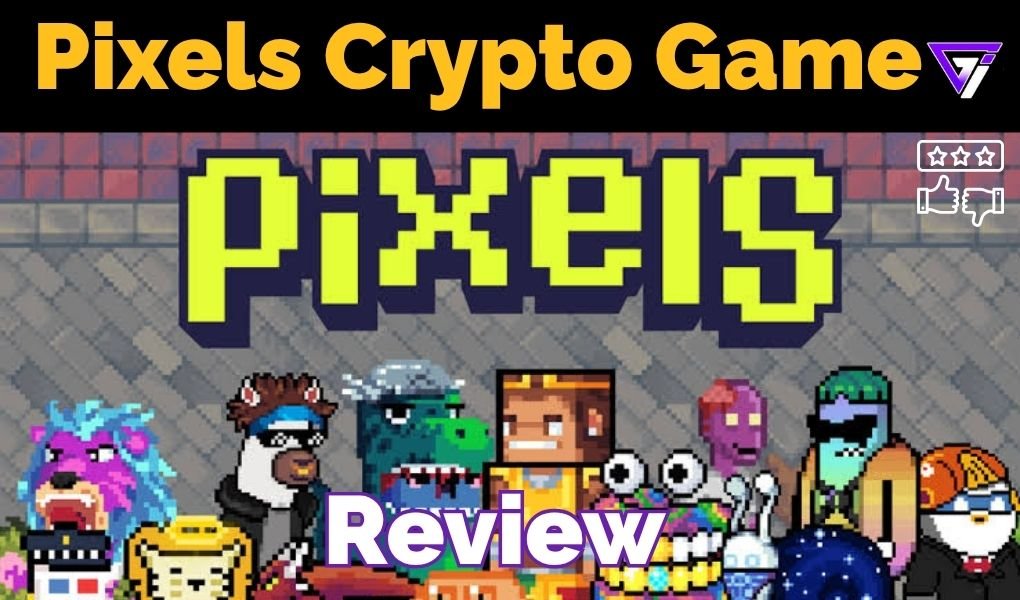
When I look at Pixels, the first thing I notice is that its blockchain features are not the entire point of the game. That matters because plenty of crypto games make the token economy feel more important than the gameplay itself.
Pixels takes a different approach, combining farming, crafting, exploration and social features with optional blockchain ownership on Ronin. I wanted to separate the actual game from the crypto speculation and work out where Pixels stands in 2026.
In this review, I’ll break down its gameplay, economy, accessibility, strengths, weaknesses and who I think should actually spend time with it.
What Is Pixels?
Pixels is a free-to-play farming and exploration MMO built on the Ronin blockchain. The game combines farming, resource gathering, crafting, quests and social interaction in a persistent pixel-art world, with blockchain technology used for digital ownership and its wider economy.
What interests me most is how little the game depends on blockchain knowledge at the basic level. Players can enter the world and focus on its conventional game systems rather than immediately buying NFTs or dealing with cryptocurrency.
The game is set around a shared world that includes Terra Villa, farms and other areas where players can gather resources, complete quests and develop different skills.
How Does Pixels Gameplay Work?
At its core, Pixels is built around a straightforward progression loop: gather resources, develop skills, complete activities, craft items and continue exploring the world. Farming remains one of its defining systems, but the current game also incorporates other professions and activities.
Is Pixels just a farming game?
No. Farming is the entry point, but Pixels has expanded into a broader social MMO with resource gathering, crafting, quests, professions and player-created spaces. Ronin currently describes systems including Farming, Forestry, Mining, cooking and other skill-based activities.
What I like about the structure:
- Farming gives new players an easy starting point.
- Quests provide direction when the open world feels overwhelming.
- Crafting gives collected resources a practical purpose.
- Social areas make the world feel less isolated.
- Skill progression gives players reasons to continue developing their character.
The downside is that this type of loop can become repetitive. If you need constant combat, dramatic progression or mechanically demanding gameplay, Pixels is unlikely to provide the same stimulation as a traditional action-focused MMO.
Does Pixels Require Crypto or NFTs?
This is one of the most important questions I would answer before recommending Pixels to a conventional gamer: no, you don’t need to buy cryptocurrency or NFTs simply to experience the core game.
Pixels is free-to-play, while blockchain assets add another layer for players who want to participate in ownership, trading or the game’s wider economy.
That separation is one of Pixels’ strongest design decisions. It means a player can approach it as a farming MMO first and investigate the Web3 mechanics later.
What to know before connecting a wallet:
- You do not need to treat PIXEL as an investment to play.
- NFT ownership is an optional part of the ecosystem.
- Blockchain transactions introduce additional complexity.
- Token values can change independently of the quality of the game.
- Spending money on digital assets is not necessary for basic access.
How Does the PIXEL Economy Work?
The PIXEL token is part of Pixels’ wider economy and is used for various in-game functions. Ronin describes it as a premium utility token connected with special items, progression, guilds and governance-related features.
This is where I think players need to separate playing Pixels from speculating on Pixels.
The game can be judged on its gameplay systems, while the financial side should be treated as a separate risk. A token price going up or down does not tell me whether farming, crafting or exploring is enjoyable.
Pixels has also changed its economy over time. Its own FAQ explains that the project moved away from its earlier emphasis on BERRY and shifted its focus towards PIXEL.
That history is worth remembering because crypto-game economies are not static. Rewards, currencies and utility can change as developers attempt to keep the in-game economy sustainable.
What Makes Pixels Different From Other Crypto Games?
The biggest difference is that Pixels puts a recognisable game loop in front of the blockchain layer.
Ronin positions it as a social MMO and life-sim rather than simply a token-earning application. Players can farm, explore, build relationships, develop skills and interact with a shared world.
That makes Pixels more accessible than a game where understanding wallets and token mechanics is effectively part of the tutorial.
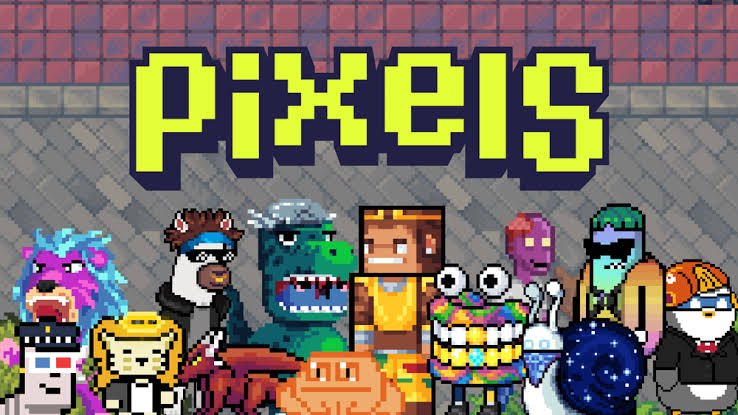
Another interesting element is digital ownership. The Ronin ecosystem supports NFT-based assets and land, while Pixels also supports interoperable avatars from different Web3 communities.
Is Pixels actually fun without the crypto features?
Yes, the core concept works without treating cryptocurrency as the objective. Farming, crafting, exploration and quests form the playable foundation, while blockchain ownership sits around those systems.
Best suited to:
- Players who enjoy relaxed farming games.
- MMO fans who like social worlds.
- Gamers curious about Web3 without wanting to buy NFTs immediately.
- Players who enjoy collecting and crafting systems.
Potential problems:
- The relaxed pace will not suit everyone.
- Repetitive resource gathering can become a limitation.
- The crypto economy adds complexity that traditional farming games do not have.
- Token speculation can distract from the actual game.
Pixels vs Traditional Farming Games
I would not judge Pixels solely against other blockchain games. The more useful comparison is with conventional farming and life-sim games.
Games such as Stardew Valley have much deeper traditional farming-sim mechanics and a different approach to progression. Pixels’ advantage is not that it replaces those games; it is that it combines a familiar farming structure with a persistent online world and blockchain ownership.
That makes the experience fundamentally different.
| Area | Pixels | Traditional farming sim |
|---|---|---|
| Farming | Yes | Yes |
| Persistent online world | Yes | Usually limited |
| Social MMO elements | Yes | Varies |
| Blockchain ownership | Yes | Usually no |
| NFT ecosystem | Yes | No |
| Crypto economy | Yes | No |
| Traditional offline focus | No | Often |
Pros and Cons
| Pros | Cons |
|---|---|
| Free-to-play entry point | Gameplay can become repetitive |
| Farming and crafting are easy to understand | Crypto adds extra complexity |
| Built around a persistent social world | Economy can change over time |
| Ronin integration | Not ideal for players seeking action-heavy gameplay |
| Blockchain ownership is optional for basic play | Financial speculation can overshadow the game |
Who Should Play Pixels?
I think Pixels makes the most sense for players who are curious about crypto gaming but still want an accessible game underneath the Web3 mechanics.
You do not need to approach it as an investment. In fact, I would recommend judging the game first and the token economy second.
Play Pixels if you:
- Enjoy farming and life-sim games.
- Like persistent multiplayer worlds.
- Want to explore Web3 gaming without an expensive entry point.
- Enjoy crafting, gathering and progression systems.
Look elsewhere if you:
- Want demanding combat.
- Expect a deep single-player farming simulation.
- Are primarily interested in earning cryptocurrency.
- Dislike online economies and digital ownership systems.
Is Pixels Worth Playing in 2026?
Yes, I think Pixels is worth trying if you are interested in relaxed MMO gameplay or want to understand what a more accessible Web3 game looks like. Its free-to-play structure removes much of the initial financial barrier, while farming, crafting, quests and social systems provide a conventional gaming foundation.
What I would not do is treat Pixels as a guaranteed way to make money. The token economy is separate from the question of whether the game itself is enjoyable, and crypto assets always carry financial risk.
For me, that distinction is the key to understanding Pixels: play it because you like the game, not because you expect the game to pay you.
People Also Ask About Pixels
Yes. Pixels is free-to-play, although optional premium features and blockchain assets can add costs. You do not need to purchase NFTs simply to access the basic game.
Pixels is built on Ronin, the gaming-focused blockchain associated with the wider Sky Mavis ecosystem.
No. The game supports players without NFTs, while NFT assets and ownership provide additional options within the wider ecosystem.
PIXEL is the game’s premium utility token and is used across parts of the Pixels ecosystem, including certain items, progression and other platform features. Its utility can change as the game develops.
Yes. The underlying game focuses on farming, gathering, crafting, quests and social interaction, so you can approach Pixels primarily as a browser-based MMO rather than a cryptocurrency project.
My Final Verdict
Pixels succeeds because it gives the blockchain layer something many crypto games have struggled to provide: an actual game around it. I like the fact that players can start for free and decide later whether NFTs, wallets and the PIXEL economy are worth exploring.
The relaxed farming loop will not suit everyone, and I would not recommend playing it purely for financial rewards. But if you enjoy social farming games and want a low-risk introduction to Web3 gaming, Pixels is one of the more approachable places to start.