
When I look at Big Time, I see a Web3 RPG that is trying to solve a problem many blockchain games never really address: making the game itself worth playing.
Big Time Studios has built a free-to-play multiplayer action RPG around dungeon runs, class switching, procedural generation and player-owned collectibles rather than making the token economy the entire experience. That distinction matters.
In this review, I break down what actually makes Big Time interesting, where its design can become repetitive, how the NFT and $BIGTIME systems fit into the game, and who I think should give it a chance in 2026.
What is Big Time?
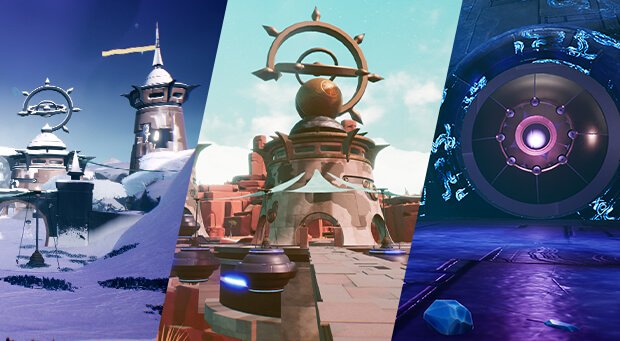
Big Time is a free-to-play multiplayer RPG set in a collapsing timeline where different periods of history collide. I think that premise gives the game more personality than the typical fantasy setting, particularly because its world can throw together characters, creatures and environments from wildly different eras.
The important distinction is that Big Time does not require players to buy NFTs simply to access its core game. Its current model is built around free access, while optional digital collectibles and the player-driven economy sit alongside the gameplay.
Is Big Time free to play?
Yes. Big Time is currently presented by its developer as a free-to-play multiplayer RPG, with the core game available without requiring players to purchase additional game content. The Web3 elements are layered around collectibles, crafting and the player-driven economy rather than acting as an entry fee.
What this means for players:
- You can start without buying a collectible.
- The core experience is built around RPG progression and dungeon content.
- Optional collectibles become more relevant if you want to engage with crafting or the wider economy.
That is one of the strongest changes to consider when comparing the current game with older reviews. GAMES.GG’s earlier review focused heavily on systems and restrictions that were relevant during its previous development phase.
Big Time gameplay and combat
The part of Big Time I find most interesting is its attempt to make the RPG loop work before introducing the blockchain mechanics. Dungeons combine combat, objectives, exploration and loot, while procedural generation is used to create different environments, objectives and enemies.
That gives the game a natural structure: enter a dungeon, fight through enemies, complete objectives, defeat bosses and improve your character. The problem is that procedural generation cannot automatically make every activity feel meaningful.
Does Big Time have repetitive gameplay?
It can. Procedural generation creates variation, but repeated dungeon objectives can still start feeling familiar when the underlying activities do not change enough. This was one of the clearest criticisms in the GAMES.GG review, which highlighted repetitive objectives and grinding as weaknesses.
Where I see the main risk:
- Repeated dungeon objectives can become routine.
- Grinding is central to the progression loop.
- Procedural variation does not guarantee meaningful variety.
- Players looking for a tightly scripted RPG may find the loop less satisfying.
For players who enjoy loot-driven games and co-op grinding, that structure is much easier to tolerate. If you need every mission to introduce a new mechanic or story beat, Big Time is less convincing.
Pocket Watches and class switching
Pocket Watches are one of Big Time’s better ideas because they let players change character classes while preserving class-specific skills, abilities and equipment. The current game lists classes including Time Warrior, Chronomancer, Shadowblade, Quantum Fixer, Battlemancer and Techblade.
How do Pocket Watches work in Big Time?
Pocket Watches let players maintain progression for different classes rather than locking the entire character into one role permanently. I see this as particularly useful for players who regularly switch between melee, ranged and support-oriented playstyles, because experimenting with different roles is part of the game’s design.
Best for:
- Players who enjoy experimenting with RPG classes.
- Groups that need different roles for different activities.
- Anyone who does not want one permanent character build.
The system also addresses one of the biggest frustrations with traditional RPGs: committing to a class and later discovering that it does not suit your preferred playstyle.
Big Time’s Web3 economy explained
This is where I think Big Time deserves more careful analysis than simply calling it an “NFT game”. Its economy includes cosmetic collectibles, SPACE, workshops, Hourglasses and the $BIGTIME token, each serving a different purpose.
The game uses Open Loot for its player-owned economy, while the developer describes the system as centred around a cosmetic-based economy. Cosmetic collectibles can be crafted, traded and used to customise weapons and armour without directly changing core combat statistics.
Do you need NFTs to play Big Time?
No. You can play Big Time without buying NFTs or other digital collectibles. Collectibles become relevant when you want to participate more deeply in the game’s crafting, Personal Metaverse and player-owned economy systems.
The practical distinction is:
- Normal player: Play the RPG and explore its content without buying collectibles.
- Collector: Acquire cosmetic digital items and customise your character.
- Crafter: Use SPACE and workshops to participate in the crafting economy.
- Economy-focused player: Engage with Hourglasses and $BIGTIME.
That separation is important because it means the blockchain layer does not have to be the reason you play.
What are SPACE and the Personal Metaverse?
SPACE functions as virtual land within Big Time’s Personal Metaverse. Players can use it to expand their personal area and connect workshops such as Forges, Armories and Time Wardens.
I see this as one of the game’s more unusual systems because it gives the economy a physical place within the game rather than treating collectibles purely as items sitting in an external marketplace.
The downside is equally obvious: players who have no interest in crafting or collecting may have little reason to engage with the system.
How does $BIGTIME work?
$BIGTIME is the cryptocurrency used within Big Time’s broader economy. According to the game’s current documentation, it can be used for activities including refining, crafting, upgrading collectibles and accessing Prestige Portals.
Hourglasses are central to the token-generation system. When equipped, they allow players to acquire $BIGTIME while adventuring, with token generation affected by factors including Hourglass rarity, player skill and game difficulty.
Can you earn $BIGTIME by playing?
Yes, the game’s economy documentation states that players can acquire $BIGTIME through in-game activity when using the relevant Hourglass system. However, I would not treat this as a guaranteed income stream or approach Big Time primarily as a money-making opportunity.
What I would keep in mind:
- Token generation depends on the game’s economy and equipment.
- Hourglasses have limited active time and require recharging.
- Cryptocurrency value can change independently of game quality.
- Playing for enjoyment is a safer basis for deciding whether the game is worthwhile.
That last point matters. A good RPG can remain enjoyable even if its token economy changes. A game that only makes sense when the token price rises has a much weaker foundation.
Big Time: Pros and Cons
After separating the actual RPG from its Web3 economy, I think the strengths and weaknesses become much easier to judge.
| Pros | Cons |
|---|---|
| Free-to-play core game | Dungeon activities can become repetitive |
| Co-operative multiplayer focus | Grinding is central to progression |
| Multiple classes and Pocket Watches | Web3 systems add complexity |
| Procedural dungeon generation | Economy may not interest traditional RPG players |
| Player-owned cosmetic economy | Token value is inherently volatile |
| Personal Metaverse and crafting systems | Some features are primarily useful to economy-focused players |
Is Big Time worth playing in 2026?
For me, the answer depends almost entirely on what you want from it. If you enjoy action RPGs, co-op dungeon runs and experimenting with different classes, there is a genuine game underneath the Web3 layer. The free-to-play model also removes one of the biggest barriers to trying it.
If you are specifically looking for a traditional single-player RPG with a tightly scripted campaign, I would look elsewhere. Likewise, I would not choose Big Time purely because of its token economy.
The strongest reason to try it is the combination of co-operative RPG gameplay, class flexibility and an unusual time-travel setting.
What I would know before starting Big Time?
The biggest mistake would be approaching Big Time as though every player needs to participate in its blockchain economy. You do not.
I would start by learning the core dungeon loop and finding the class that suits your preferred combat style. Only after that would I spend time understanding Pocket Watches, crafting, SPACE, Hourglasses and $BIGTIME.
That approach keeps the RPG enjoyable and stops the economy from becoming more complicated than it needs to be.
People Also Ask About Big Time
Big Time is a playable multiplayer action RPG developed by Big Time Studios. It incorporates blockchain-based collectibles and a token economy, but its core offering is a free-to-play game.
No. The developer currently describes Big Time as free-to-play, with digital collectibles functioning as an optional part of its wider player-driven economy.
Big Time is currently described by its developer as an action RPG for Windows PC.
$BIGTIME is used within the game’s economy for activities such as crafting, upgrading and refining collectibles, as well as accessing certain game features.
Yes. You can approach it primarily as a free-to-play multiplayer RPG. The crypto and collectible systems become relevant if you choose to participate in the player-owned economy.
My Final Verdict on Big Time
I think Big Time is more interesting as an RPG than as a crypto proposition. Its strongest qualities are the free-to-play structure, co-operative dungeon gameplay, flexible class system and distinctive time-travel setting. The Web3 economy is there if you want it, but it does not need to be the reason you start playing.
The main weakness is repetition. Procedural dungeons can extend replayability, but repeated objectives and grinding can eventually wear thin.
My verdict: Big Time is worth trying if you enjoy co-op action RPGs and are curious about Web3 gaming, but I would play the game first and treat its economy as optional.
Sources used
| Source | Why I used it |
|---|---|
| Big Time official website | Current game description, free-to-play model and core systems |
| Big Time Help Centre | Current access, classes, economy and system requirements |
| Big Time Wiki | Detailed information on Hourglasses, SPACE, workshops and $BIGTIME |
| GAMES.GG | Competitor review and historical gameplay criticisms |